
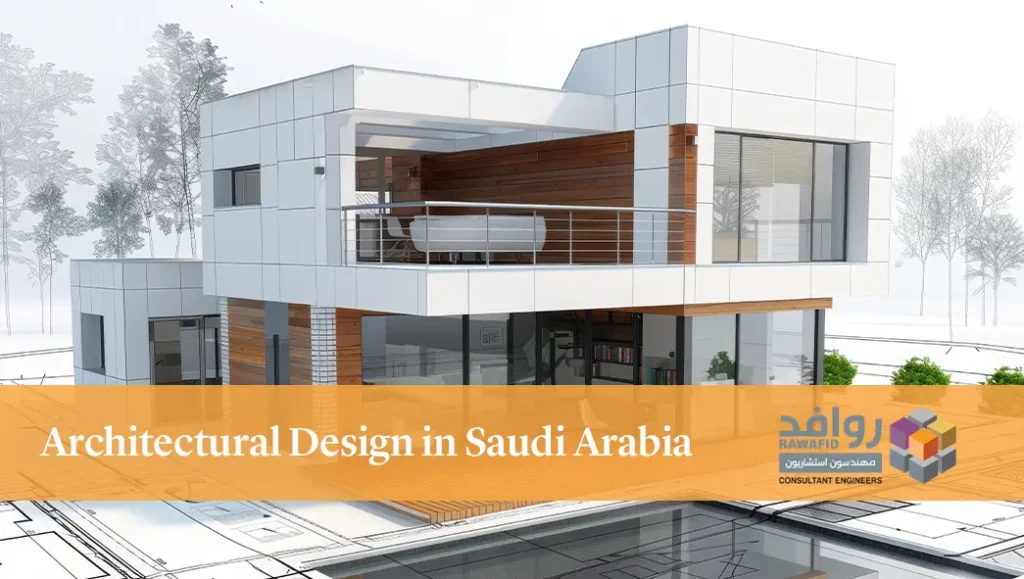
Architectural Design in Saudi Arabia: Rapidly Evolving Field
Architectural design in Saudi Arabia has witnessed rapid development in recent years, alongside the urban renaissance taking place across the Kingdom. With the expansion of residential and commercial projects and the increasing awareness of owners and investors, architectural design is no longer a formal step preceding construction; it has become a key factor determining a project’s success in terms of comfort, quality, cost, and future property value.
In this article, we provide a comprehensive guide explaining the concept of architectural design, the role of the architect, design stages, common architectural styles, design costs and how to calculate them, as well as the difference between urban planning and urban design, and the importance of 3D design.
What is Architectural Design in Saudi Arabia and Why is it Important?
Architectural design is the process of planning and organizing buildings to achieve a balance between functionality, aesthetics, and regulatory compliance. It is not limited to drawing plans; it also involves studying user needs, site characteristics, and surrounding environmental conditions.
In Saudi Arabia, the importance of architectural design increases due to:
Hot climate requiring effective ventilation and thermal insulation solutions.
Compliance with the Saudi Building Code and municipal requirements.
High construction costs, making proper planning a way to reduce waste.
Diversity of building styles across regions.
Desire to achieve higher quality of life within buildings.
Good architectural design directly affects residents’ comfort, usability, and reduces future maintenance costs.
The Role of the Architect in Construction Projects
The architect is the central figure in any successful construction project, responsible for transforming the client’s ideas into executable plans that comply with regulations.
Tasks of an Architect in Saudi Arabia:
Studying the owner’s requirements and providing suitable design solutions.
Preparing precise architectural plans, including room layouts and space allocation.
Designing building facades that reflect the project’s identity.
Coordinating with the structural engineer and other disciplines.
Preparing plans required for obtaining a building permit.
Supervising execution if agreed upon.
Choosing an architect experienced in the Saudi market saves time and reduces costly errors during construction.
Architectural Design Stages Step by Step
The architectural design process goes through several interconnected stages, each forming the foundation for the next:
1. Requirement Study and Site Analysis
At this stage, the client’s needs, number of rooms, budget, and site conditions, including orientation, setbacks, and site characteristics, are assessed.
2. Preliminary Architectural Design
A preliminary concept is prepared showing the layout of spaces and public areas, with an initial proposal for the building’s form.
3. Detailed Architectural Design
Plans are developed accurately, including final dimensions, locations of doors and windows, stairs, while considering practical use of each space.
4. Plan Coordination
Architectural plans are coordinated with structural, electrical, and mechanical plans to avoid conflicts during execution.
5. Permit Plans Preparation
Final plans required for submission to the relevant authorities and obtaining the building permit are prepared.
6. Supervision and Execution
Execution is monitored on-site to ensure compliance with the approved plans.
Advantages of 3D Architectural Design (3D)
3D architectural design has become essential in modern projects in Saudi Arabia due to its significant benefits:
Providing a realistic visualization of the building before construction.
Helping the client easily understand the design.
Detecting design errors early.
Improving façade design and material selection.
Reducing modifications during execution.
Saving time and cost.
Enhancing the final quality of the project.
3D design is particularly important in villas and commercial projects with complex architectural details.
Building Facade Design in Saudi Arabia
Architectural façade design is the first element reflecting the building’s identity and influencing its overall impression. In Saudi Arabia, façades must:
Reduce direct sun exposure.
Achieve effective thermal insulation.
Harmonize with the urban character of the area.
Use materials suitable for the local environment.
A well-considered façade ensures a more beautiful and efficient building in the long term.
Architectural Styles in Saudi Arabia
Architectural styles vary depending on taste and project type. The most notable include:
Modern Style: Focuses on simple lines and open spaces.
Classical Style: Characterized by luxury and decorative details.
Najdi Style: Inspired by traditional local architecture.
Islamic Style: Features arches and geometric patterns.
Contemporary Style: A blend of modernity and local identity.
Choosing the appropriate architectural style adds aesthetic and functional value to the project.
Difference Between Urban Planning and Urban Design
Urban planning focuses on organizing cities and neighborhoods on a large scale, including land use, roads, and public services.
Urban design focuses on urban details such as street layouts, squares, and façade organization, acting as a link between urban planning and architectural design.
Integrating these stages ensures a balanced and sustainable urban environment.
Architectural Design Costs in Saudi Arabia
Design costs vary depending on several factors:
Building area.
Project type (residential or commercial).
Level of detail required.
Experience of the engineering office.
Whether supervision is included.
Costs are usually calculated either per square meter or as a percentage of construction costs.
How to Calculate Architectural Design Price
The approximate cost can be calculated using the formula:
Design Price = Building Area × Design Rate per Square Meter
Example:
If the building area is 500 m² and the rate is 25 SAR per m²:
500 × 25 = 12,500 SAR approximately
Costs may increase if 3D design or supervision is included.
Frequently Asked Questions About Architectural Design in Saudi Arabia
Can construction proceed without an architectural plan?
No, approved architectural plans are a basic requirement for obtaining a building permit.
How long does architectural design take?
Usually between two weeks and one month, depending on project size.
Is 3D design necessary?
Not mandatory, but it helps understand the project and reduce errors.
Can the design be modified after approval?
Yes, but modifications require re-approval from the relevant authorities.
Conclusion
Architectural design in Saudi Arabia is the true foundation for any successful construction project. Proper planning from the beginning saves time and money and ensures a practical, comfortable, and regulation-compliant building.
If you have further inquiries, do not hesitate to contact us.